The Race is ON!

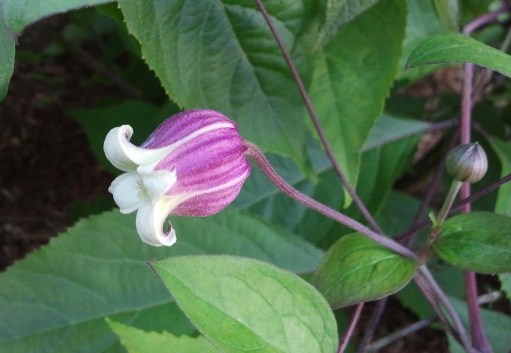
Clemats 'Pixie'

Clemats ‘Pixie’

My sweet little fragrant New Zealand Clematis ‘Pixie’ opened it’s first flower the other day, crying Seattle raindrop tears, and now sports several more blooms.  Pixie is the only clematis currently blooming in my garden (other than that cock-eyed out-of-sync Clematis cirrhosa ‘Freckles’ described in an earlier post). 

Clematis 'Markham's Pink'

Clematis ‘Markham’s Pink’

But which spring-blooming clematis will be next?  Four or five Clematis alpinas and Clematis macropetalas are budded up and ready to burst.  My treasured Clematis koreana seedling (see last post)  is in the running, too, with its little bud swelling a bit more every day.  And Clematis montana ‘Vera’, 40’ up a 90’ Port Orford Cedar, should be showing off any time now,  draping the tree with festoons of pink.

Clematis 'Cecile'

Clematis ‘Cecile’

Clematis 'Jacqueline du Pre'

Clematis ‘Jacqueline du Pre’

Clematis 'Pauline'

Clematis ‘Pauline’

Clematis 'Blue Dancer'

Clematis ‘Blue Dancer’

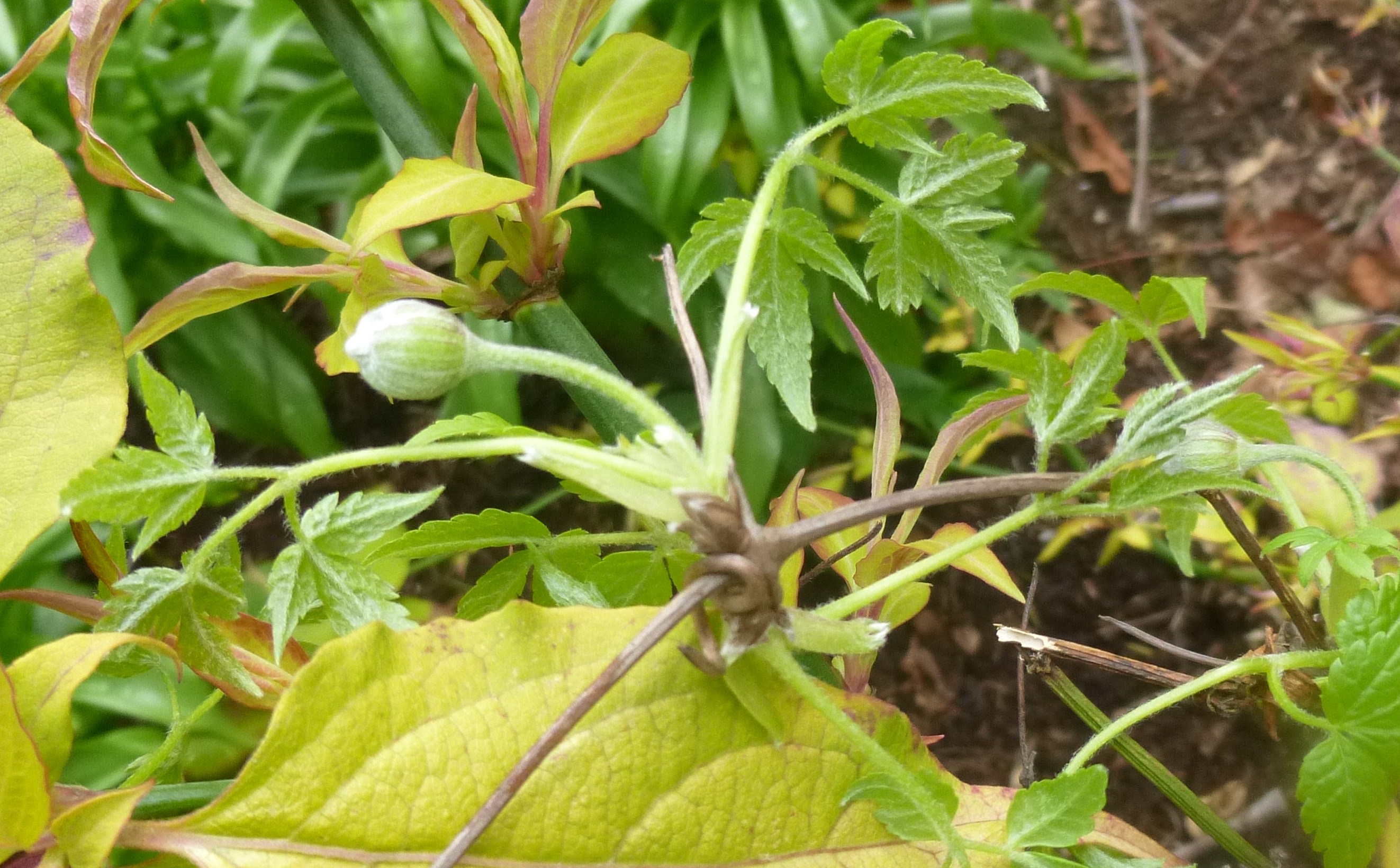
My First Ever Flower Bud on a Seedling!

Oh, the anticipation!

Oh, the anticipation!

A flower bud!  Yay-haw!

On one of Seattle’s recent lovely warm spring days I decided to take a peak at my clematis seedlings to see how they faired over the winter.  Although I keep all my seedlings outside year round, I protect them a bit from Seattle’s winter rains by tucking them under Adirondack chairs and glass tables.  When I pulled all the trays out into the open the other day, I was thrilled see my very first flower bud nodding in the sunshine!  And such a lovely thing it is, too, don’t you think?

My clematarian friends first encouraged me to plant clematis seeds in 2010, and I’ve planted more every year since.  Though many have sprouted, none had budded yet—until now.  This particular plant, which I personally caused to come into being, is from seed sent to me in 2010 by a friend in Sweden.    The mother clematis (mysteriously named Clematis koreana var fragrans H38) is a spring-blooming plant with fragrant nodding bells (click here to see photos).    Though not widely grown, H38 is important because it has been used in seed crossings to develop several fragrant clematis. 

A Treasury of Potential

A Treasury of Potential

Hmmm, I wonder which clematis I should cross mine with to try to achieve a brand new fragrant clematis hybrid.

The Nitty Gritty of Pruning Early-Blooming Large-Flowered Clematis (Pruning Group B)

Clematis 'Guernsey Cream'

Clematis ‘Guernsey Cream’

Introduction

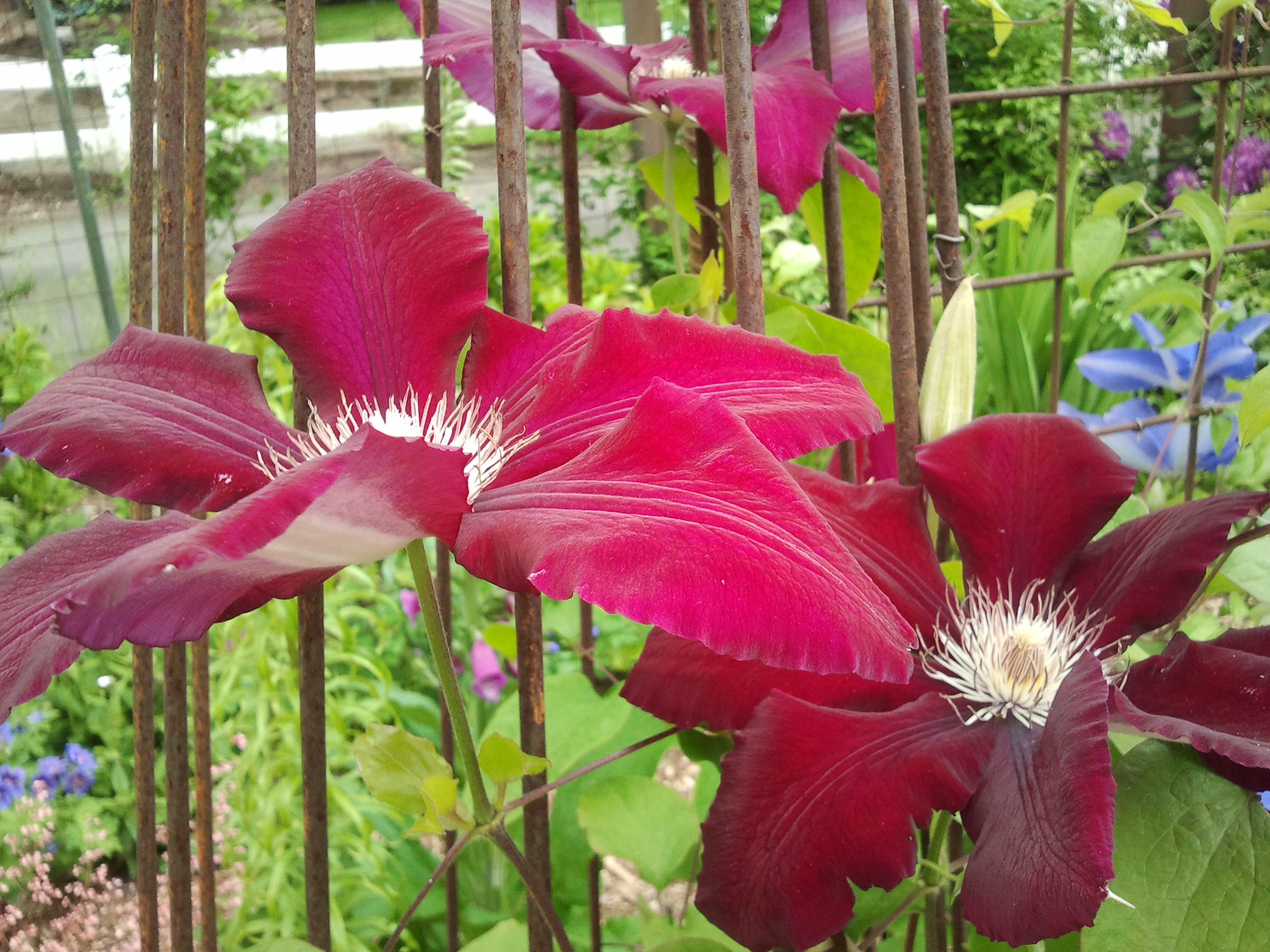
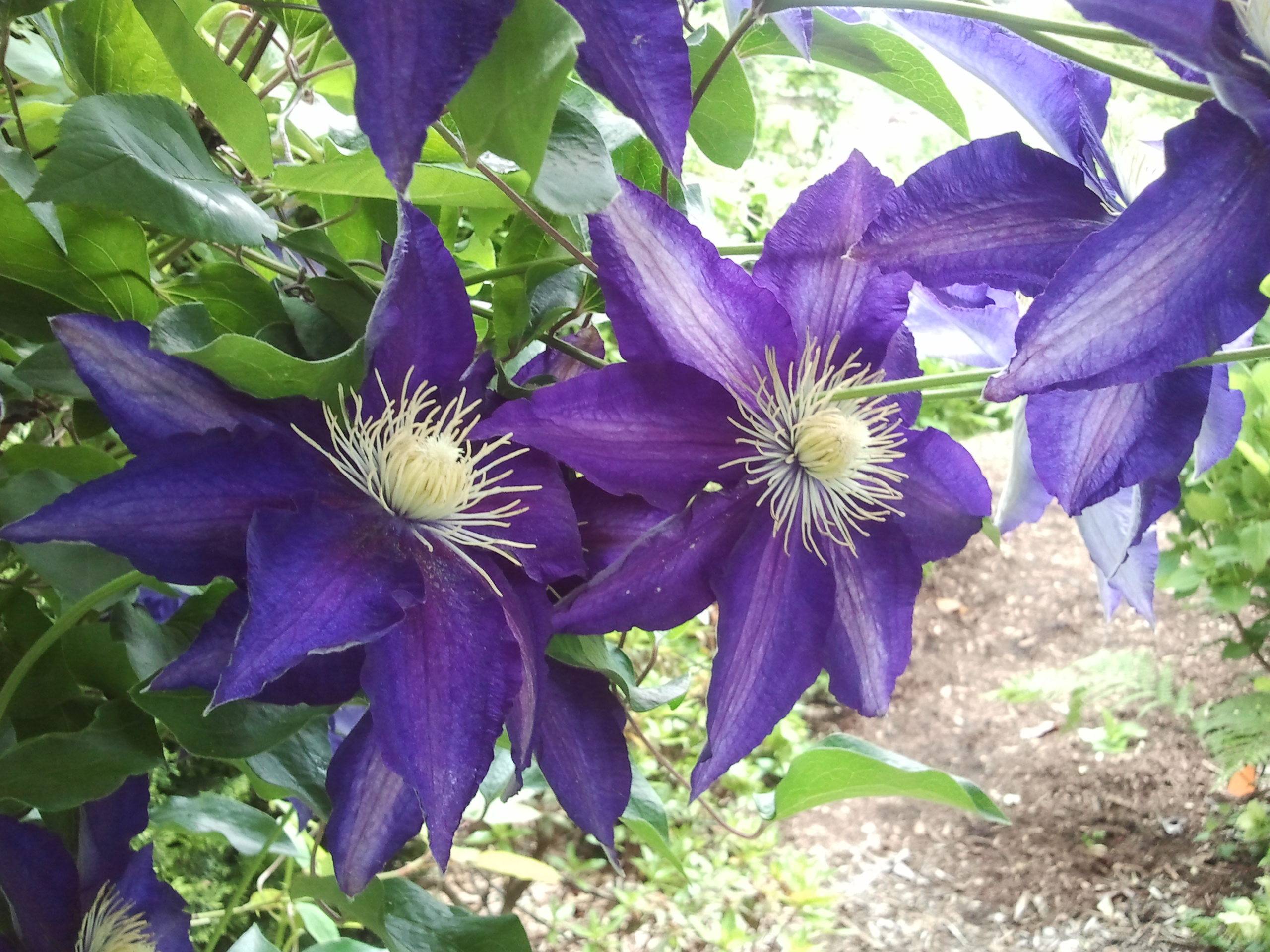
The early-blooming large-flowered clematis are the ones with heart-stopping, jaw-dropping huge and beautiful blooms in May and June. A few even bloom as early as April, at least in Seattle’s climate. Some well-known cultivars in this group include Clematis ‘Nelly Moser’ (pink), Clematis ‘Rebecca’ (red), Clematis ‘Guernsey Cream’ (cream), and Clematis ‘Daniel Deronda’ (blue). (See photos .)

Clematis 'Nelly Moser'

Clematis ‘Nelly Moser’

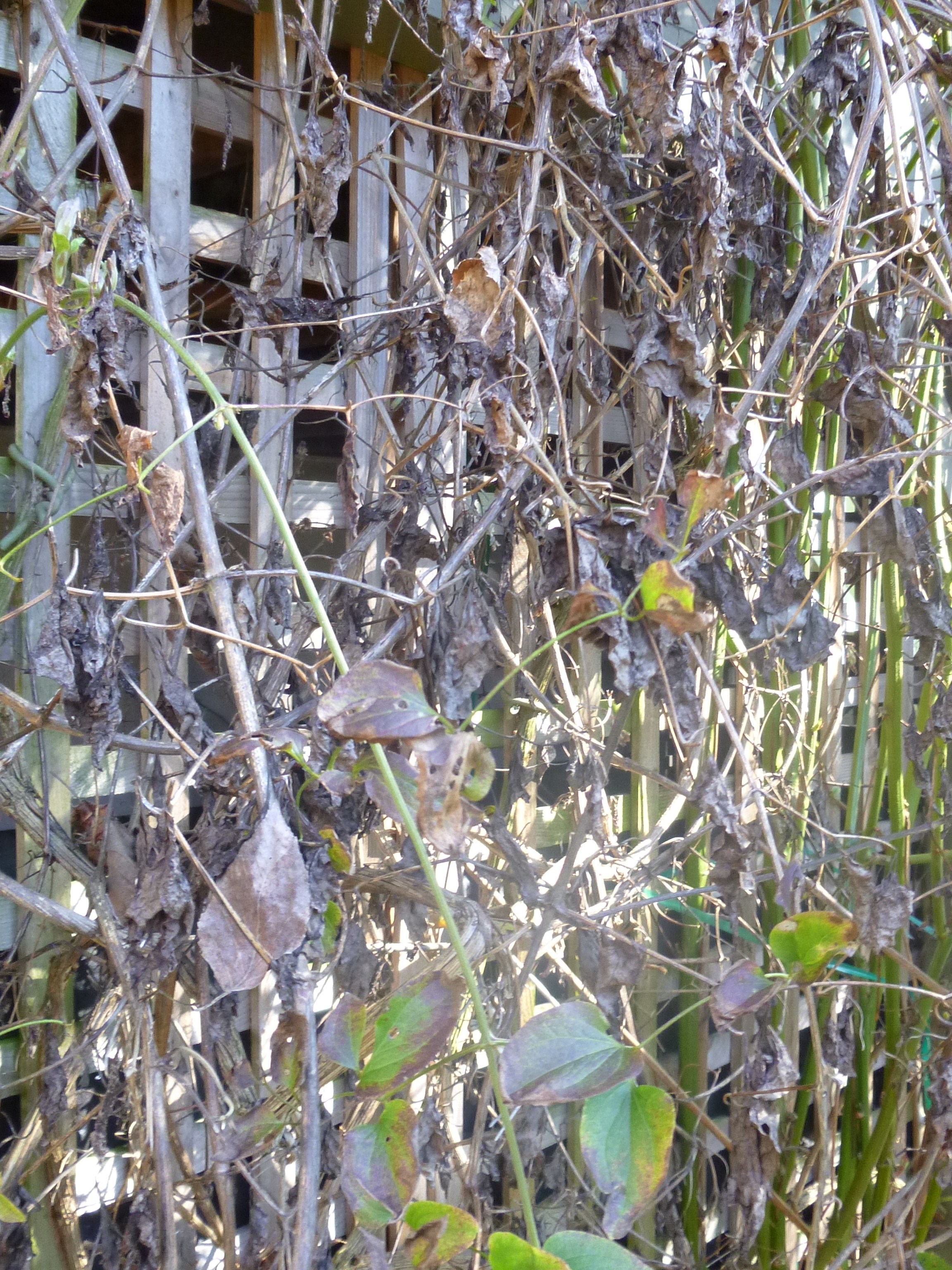
Unfortunately, Pruning Group B clematis hang onto their leaves and leaf stems all winter long, resulting in a raggedy tatty mess. Don’t plant one of these clematis by the front door, because they can’t be pruned until spring when the new green vegetative buds begin to swell, showing us where to make our cuts. Fall pruning is out because it would likely send many of those beautiful flowers off to an early death in the yard waste.   The gorgeous clematis unfortunatley also have two additional downsides:  they require fiddly pruning and they are the ones prone to a dastardly disease called Clematis Wilt.  If I can gear myself up to do it, I will write a post about wilt one of these days.

Clematis 'Rebecca'

Clematis ‘Rebecca’

Clematis 'Danel Deronda'

Stripping the Vines

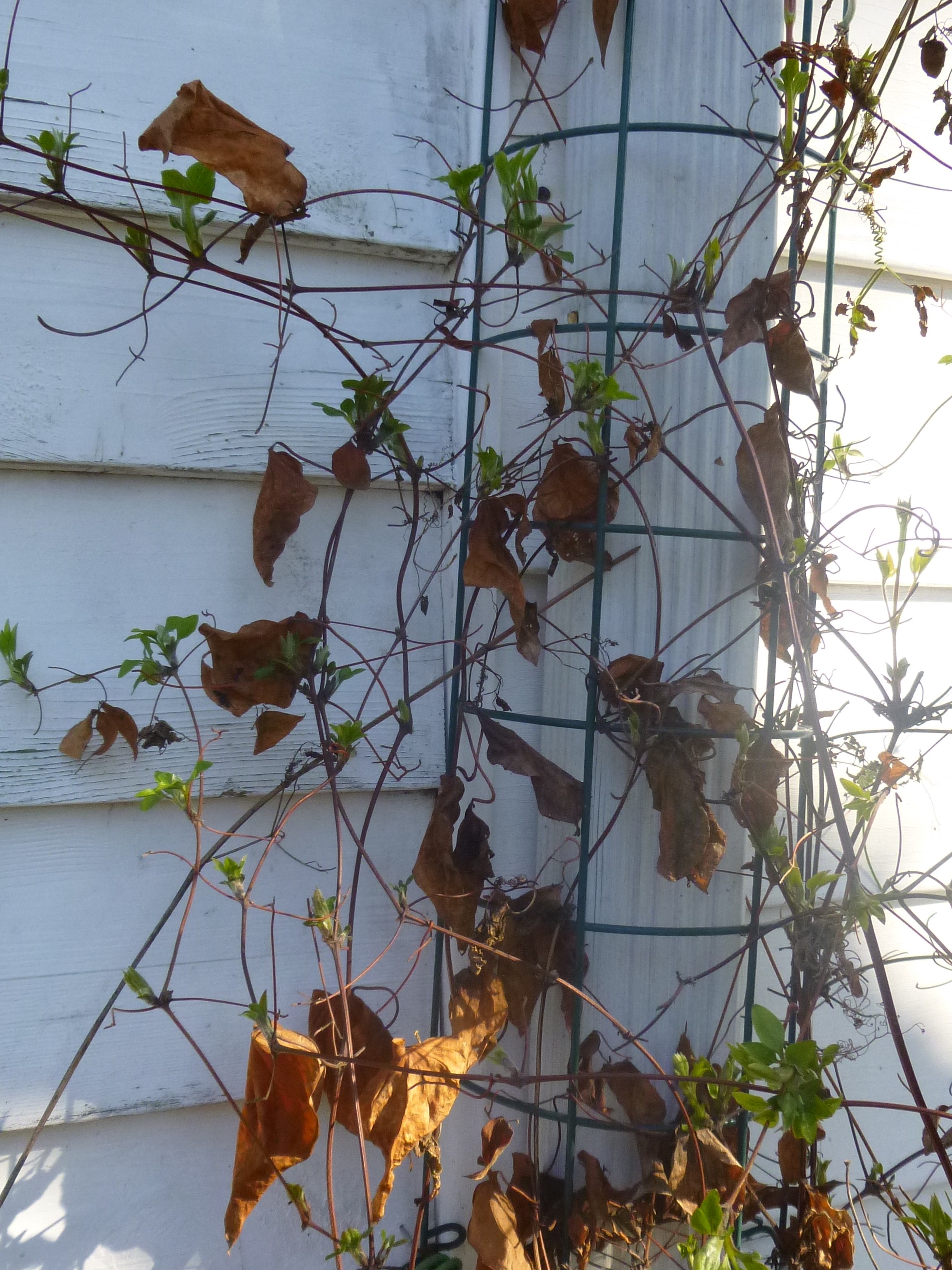
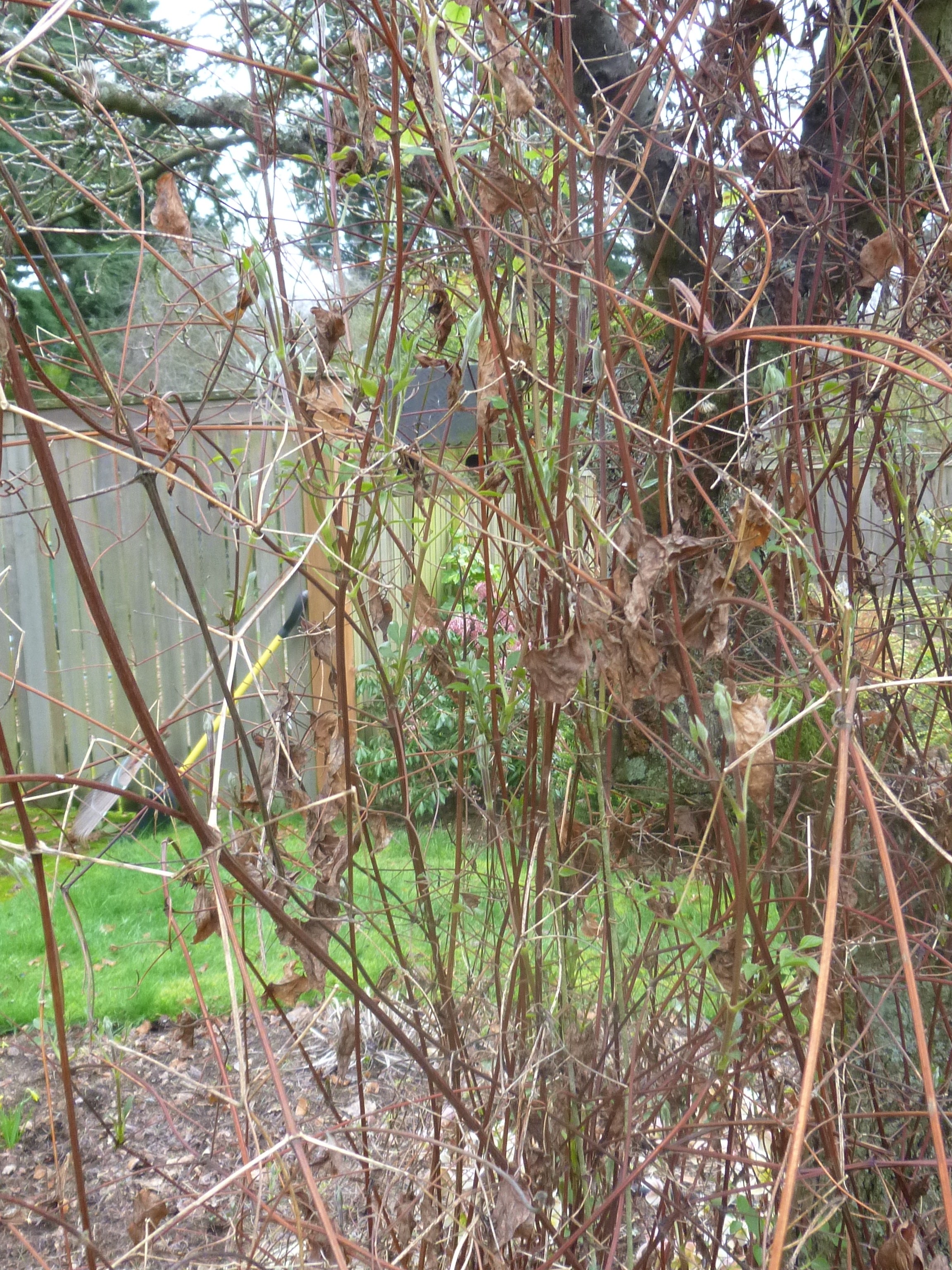
The time to prune these vines is when you begin to see green vegetative buds along the vines. The first step is to cut all the old leaves and leaf stems off the vines. The leaf stems (or petioles) are what clematis use to climb. They will have hardened over the winter and each one will have little hooks at the end (the leaf attachments), which greatly complicate untangling the vines. For a good look at what leaf stems look like, see the photo below of Clematis ‘Fair Rosamond’ before pruning. Removing the leaves and leaf stems, which is much like deadwooding a tree or shrub, is the most time consuming part of pruning the clematis in Group B. Take time and carefully remove all or most of these small leaf stems—work from the top down, bottom up, or inside out as long as you are cutting only leaves and stems, not the vines. I find that my little gardening scissors work best for this chore (see photo below). When done, you are left with stripped vines, some of which may have fallen off their supports since their little hook attachments were cut off.

Clematis 'Fair Rosamond' before pruning, showing old leaves and leaf stems

Clematis ‘Fair Rosamond’ before pruning, showing old leaves and leaf stems

Cutting Them Back

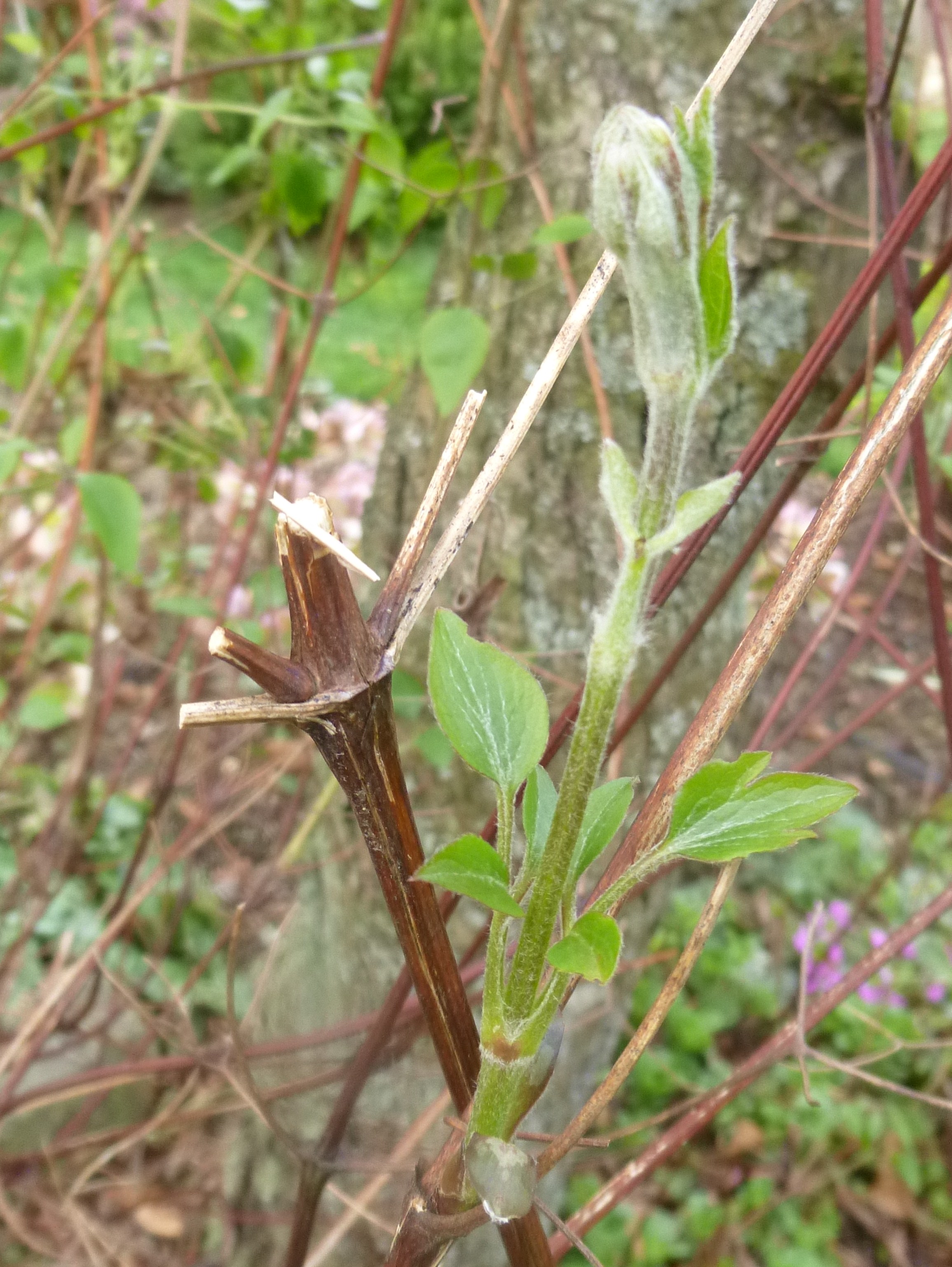
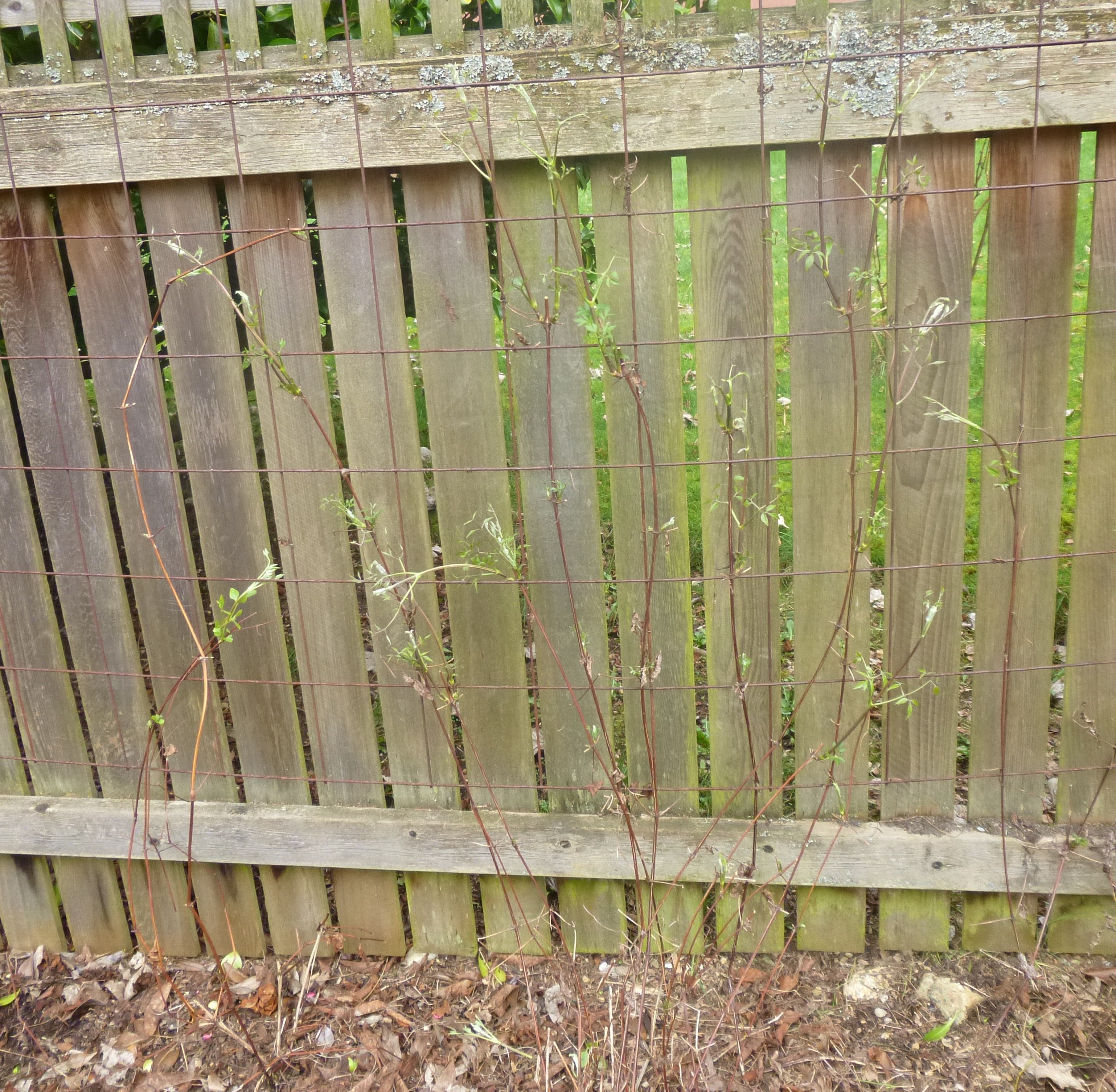
Now you can actually prune the vines.  Always do this work from the top down. The reason is that all the vines will look dead near the bottom, so you can easily cut a vine from the bottom, only to discover, to your chagrin, that the cut vine was carrying the bulk of the growth (and therefore the flowers). At the top of each vine, you will usually see a couple of joints on the stem with no growth, maybe a joint or two with puny growth, and then a joint with a large juicy green vegetative bud (see photo). Cut back to just above that juicy bud. Usually, between two inches and two feet of each vine get cut off. Don’t worry about any puny buds or no-bud joints below the juicy bud. Then tie or weave each vine onto its support. Spread the vines out as you do this and make as many as possible lay horizontally (or nearly so)—this effort will bring great rewards later with a more floriferous show over a greater area.  To see a vine with pruning completed, check out the after photo of Clematis ‘Fair Rosamond’ below.

Pruners work for cutting clematis vines, but my little gardening scissors work even better!

Pruners work for cutting clematis vines, but my little gardening scissors work even better!

After Pruning

Water and fertilize after pruning. Either use organic fertilizer (I use a mixture of manure and compost with a bit of bone meal and alfalfa thrown in) or any rose or tomato fertilizer.

Then sit back and enjoy the show! Once the clematis has just about completed its first blooming, a second bloom may occur later in the summer if you cut the vines back one-third to one-half. These clematis will grow many long vines over the summer, on which they will set the new flower buds for next year’s extravaganza. As these vines grow, twiddle or tuck the growing tips into their support in the direction you would like them to grow.

Clematis 'Fair Rosamond' After Pruning

Clematis
‘Fair Rosamond’ After Pruning

Clematis Pruning Workshop

Good Gravey, the garden is burdgeoning!  Like Ellen DeGeneres (quoting Simon and Garfunkel), I want to say slow down, you move too fast.  Whenever I’m at work, the day is perfect for gardening.  When I’m off, it pours or it’s freezing like today.  Geesh.
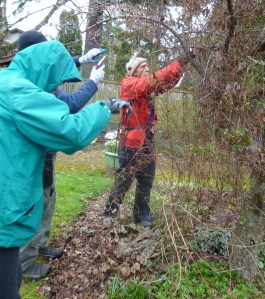
Students from the Clematis Pruning Workshop

Students from the Clematis Pruning Workshop

Clematis Pruning Workshop

Last week I taught a Clematis Pruning Workshop in my garden with four students attending.   I enjoyed it and learned new things myself!  The eager students seemed to have a good time as well.

Pruning Group A (Early-Blooming, Small-Flowered Clematis)

First we walked around the garden looking at how various Pruning Group A clematis look in early spring.  These clematis, which bloom between October and May, don’t usually need an annual prune. 

We checked out my Clematis montana growing in a 90′ tall Port Orford cedar (it’s about 40′ or 50′ into the tree, which looks amazing when it blooms).  We also inspected three evergreen New Zealand clematis that will show off their fragrant creamy white blossoms soon.  Two Clematis cirrhosa, also evergreen, are growing in the garden, too, and one of them, Clematis cirrhosa ‘Freckles’ (see my February post highlighting this clematis), has been in bloom for over a month now.  One of the most unusual Pruning Group A clematis I have is Clematis napaulensis, which is winter green (it goes dormant in the summer) and sports creamy white bells with red stamens in winter–mine is young and not blooming yet.  But the majority of Pruning Group A clematis in my garden are various hybrids of Clematis alpina and Clematis macropetala, both of which have lovely nodding bells in many colors in April and May.

Comparing Early  Spring Growth on Various Clematis

Clematis alpina (Pruning Group A)

Clematis alpina (Pruning Group A)

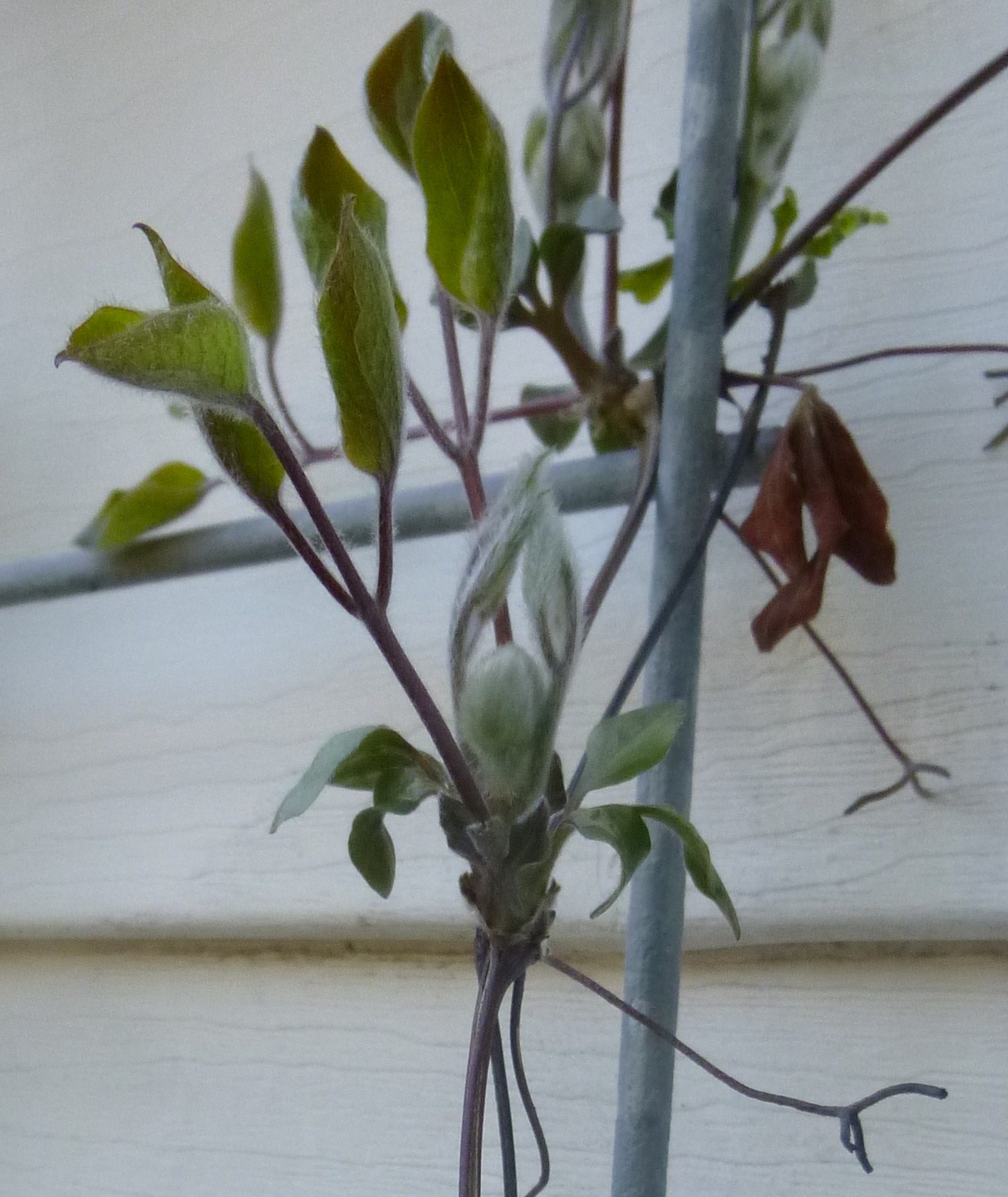
 We found that the Pruning Group A clematis (alpinas and macropetalas) and the large-flowered spring-blooming Pruning Group B clematis both had new leaf growth tight to the vine in early spring, and many were already showing flower buds.  The leaves on the alpinas/macropetalas are more finely divided than those on the Pruning Gruop B clems.  See photos.  When compared to Pruning Group C clematis in my garden, which bloom on old wood, we found that the young growth on the Cs stretched out much further from the main vine and showed no signs of flower buds.   These clematis are working to grow vines this time of year, while the As and Bs on the other hand devote their spring energy to producing flowers–they will throw vines after they finish blooming.   
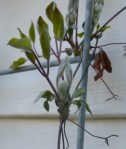
Clematis 'Guernsey Cream' (Pruning Group B)

Clematis ‘Guernsey Cream’ (Pruning Group B)

Please note:  these photos and comments represent observations of particular clematis in my garden and can’t really be used to identify which pruning group another clematis represents.  If you don’t know what clematis you have or when it blooms, prune it lightly as for Pruning Group B (which will be described in my next post, coming soon) and wait to see when it blooms and what it looks like in order to identify it.  
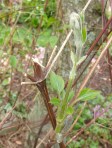
Clematis 'Betty Corning' (Pruning Group C)

Clematis ‘Betty Corning’ (Pruning Group C)

The Actual Pruning

Pruning Group A clematis do not typically require an annual pruning.  However, because most of them are large plants, they will eventually get into trouble and need to be pruned, very often after they have gotten large and unwieldy or when they are growing where they are not wanted.   The best way to handle this situation  is to prune shortly after the plant has finished blooming.  I described the process to the group and had them practice on a large plant.  They divided the plant into two parts — you have to be a bit rough to get the plant separated into two groups, but don’t worry, the plant will recover.  Then they cut half of the plant back hard and left the other half to be pruned hard next year.   This process has the two-fold advantages of ensuring that the plant won’t succomb to the hard pruning and maximizing bloom for the following spring.

We spent considerable time on Pruning Group B plants, which require much more detailed pruning (see my upcoming post for details).  Additionally, the group pruned a large Pruning Group C plant (Clematis ‘Betty Corning’) so that it would have a leg up into the tree it is growing in (normally Pruning Group C plants are cut back to 1′ – 3′ because they bloom on new wood).    I demonstrated a similar pruning situation on a Clematis ‘Madame Julia Correvon’ that must climb a fence before it can reach the tree it will embellish with its red blossoms in summer.  See before and after photos below.
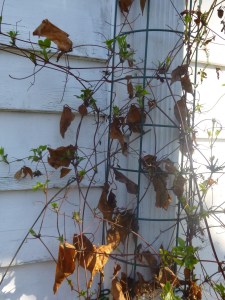
 

Clematis 'Fair Rosamond' Before(Pruning Group B)

Clematis ‘Fair Rosamond’ Before(Pruning Group B)

Clematis 'Betty Corning' Before Pruning

Clematis ‘Betty Corning’ Before Pruning

Clematis 'Madame Julia Correvon' Before

Clematis ‘Madame Julia Correvon’ Before


Clematis 'Fair Rosamond' After

Clematis
‘Fair Rosamond’ After


Clematis 'Madame Julia Correvon' After

Clematis ‘Madame Julia Correvon’ After

Clematis 'Betty Corning' After

Clematis ‘Betty Corning’ After

Clemaniac Heaven


Clemaniac Heaven!

Clemaniac Heaven!

Lately, we here in Seattle have been blessed with a few sunny days and, oh , the juices are flowing — in me and in my plants!  Garden cleanup, including weeding, sweeping, chicken-coop cleaning, and many assundry early spring tasks have been filling my outdoors time (when I’m off from work on sunny days).  One task I accomplished is to gather together all the clematis that have showed up my potting area over the past several months.  Ahhhhh, such glorious promise in all those pots.  Now that rain is forecasted for  a couple of days, I can stay cozy  inside, check all my clematis resources, and plan where each new baby will go.

Clematis Pruning

Most of my clems in the ground are sprouting now and need pruning badly, but I’ve been holding off.  On Thursday, I have the privilege through my job at PlantAmnesty to teach a small cadre of students (4 or 5) how to prune clematis in my garden.  I will discuss pruning and demonstrate on my own plants and then allow the students hands-on practice.  I’m really looking forward to the workshop and will be sure to post before and after photos!

February Bloomer: Clematis cirrhosa var purpurascens Freckles

Winter-Blooming Clematis Freckles

Winter-Blooming Clematis Freckles

Yes, I truly do have a clematis actually blooming in Seattle in February! Clematis cirrhosa var purpurascens ‘Freckles’ (that’s its full name–really, it is!) is presently gracing my garden with blooms, well, one anyway.  The blossom I gleefully discovered two days ago was found only because I leaned half over the deck checking out my vines hoping against hope for a bloom. Then–aHA–I saw one! And almost killed myself in my excitement by leaning just a tad too far over the deck rail before I came to my senses. Alas, today when I wanted to photograph it for posterity, it had already shriveled.  Nearby buddies were still only small white buds. I certainly didn’t want to disappoint readers, especially Ingrid in Sweden, who were hankering to see a clematis actually blooming now in a garden real time. So, this morning I hunted around and right on the deck in easy reach of the camera, what to my wondering eyes should appear, but a lovely single bloom. 

The fresh-looking crisp  foliage of this clematis is dainty, apple-green, and deeply divided, almost fernlike.  Even when it’s not blooming it adds welcome green accents to the winter garden. 

Cirrhosa Freckles in July

Cirrhosa Freckles in July

The down-side is that this clematis, and all its Clematis cirrhosa cousins, are tender, being natives of the Mediterranean, from southern Spain and northern Africa to Syria.  Luckily, here in Seattle, we can grow them easily.   This particular clematis was raised from seed collected on Mallorca (an island in the Mediterranean Sea) by Allen Peterson, curator of the Chelsea Physic Garden in the 1980s.  Well-known clematis nurseryman, Raymond Evison, received seeds from Peterson and introduced one of the resulting seedlings as Freckles in honor the freckled face of one of his daughters.

A sun-loving vine that can grow 12 – 15′, Clematis Freckles is expected to bloom betweeen October and February.  My particular plant is confused–or maybe just a rebel.  This year it bloomed with strong red freckles in July with my burgundy Barberry ‘Helmut’s Pillar’ and the chartreuse flowers of Bells of Ireland — then again now in very late February with a pallid flower, whose wan look is due I presume to the short gray days we’ve had, which lacked enough sun to bring out strong color.

If you have one, let us know how yours behaves (or misbehaves).

News Flash: Clematis Serious Black FOUND!

Sundquist Nursery Label for Clematis Serious Black

Sundquist Nursery Label for Clematis Serious Black

Update! If you didn’t get a chance to get to the Northwest Flower & Garden Show in February to pick up your own Clematis Serious Black, all is not lost! Nils Sundquist of Sundquist Nursery — the nursery that was selling Clematis Serious Black at the Show — will also be selling this plant at his Garden Opens on the Kitsap Penninsula. See Nis’ comment below!

While wandering around the Northwest Flower & Garden Show today, enjoying the sites and feeding my need for spring, I asked each of the plant vendors I ran up on whether they carried clematis.  Several were selling Clematis armandii and one even had a couple of New Zealand clematis.  But when I stopped by Sundquist Nursery late in the day, I hit PAYDIRT!   Sundquist Nursery is selling bare-root plants of — drum roll, please — Clematis recta ‘Lime Close’, aka Clematis Serious Black!   

Oh, those lovely little roots!

Oh, those lovely little roots!

To learn more about this very interesting non-climbing clematis that sports  black (well, almost black) leaves, see my earlier post on the subject.  Clematis Serious Black was recently featured in Fine Gardening magazine, but the source mentioned for the plant (the Northwest Perennial Alliance) carries only seed.  As luck would have it, if you can get  yourself (or send a friend) to the Flower Show between now and Sunday (2/24) at the Convention Center in downtown Seattle, you too can have a bare-root plant of Clematis Serious Black of your very own (I  already bought mine!).  $12!!!  The box I found mine in seemed to have 15 or 20 more, so hurry on down!

Come See Me at the Northwest Flower & Garden Show

A Gold-Winner at the 2012 Northwest Flower & Garden Show

A Gold-Winner at the 2012 Northwest Flower & Garden Show

Did you know that the Northwest Flower & Garden Show, which opened Wednesday, 2/20,  in downtown Seattle at the Convention Center and runs through Sunday, 2/24, is the second largest Flower Show in the US (second only to Philadelphia)?  And it’s the third largest in the world (the Chelsea Flower Show in England, of course, being the biggest of all)!  So get on  down to the Convention Center and get your spring fever on!  I sure will.

This year I will be volunteering at the show for PlantAmnesty on Wednesday, for the Master Gardeners on Thursday, and then on Friday — taDAAA — I will be a first-time speaker at the Flower Show on the topic of (big surprise here) CLEMATIS!  Come by and hear me shed light on the Care and Pruning of Clematis, the Queen of Climbers. 

Friday, February 22, 7pm in the Hood Room at the Show. 

If you have an interest in hearing me speak about clematis but can’t make it on Friday, I will be speaking again on Saturday, March 2nd, at 11am at Sky Nursery — for PlantAmnesty’s fourth annual Prune-a-Thon.

Guess what!  I found a clematis blooming in my garden this morning!  I’ll tell  you about it very soon.

Ordering Clematis: Brushwood Nursery

Now let’s turn to the third, but most definitely not the least, of my three favorite mail-order nurseries for clematis, Brushwood Nursery.  Brushwood is all about vines–climbing roses, passion flowers, trumpet vines, honeysuckles, and loads of — you got it — CLEMATIS!

Clematis viorna from Brushwood

Dan Long, proprietor of Brushwood Nursery and a member of the International Clematis Society, has connections throughout the world that allow him to offer a wide variety of large-flowered, small-flowered, and non-vining clematis. He offers over 350 varieties, though many are already unavailable until he replenishes his stock.  But many others are currently on sale!!   In my experience, plants ordered from Brushwood take off and grow well. Once of my personal favorites from Brushwood is my huge species clematis, Clematis viorna (huge as in big plant — flowers are only about an inch long).  Its blooms are dainty though sturdy little bells with pert tips that recurve like a jester’s belled slippers. I planted this lavendar and white clematis to grow through a Calicarpa (Beauty Berry).  It starts blooming in July and continues to bloom until the beauty berry produces its delicate and lovely lavendar berries.  The two look wonderful together.  Argh!  I haven’t taken an aceptable photo of the pairing yet. 

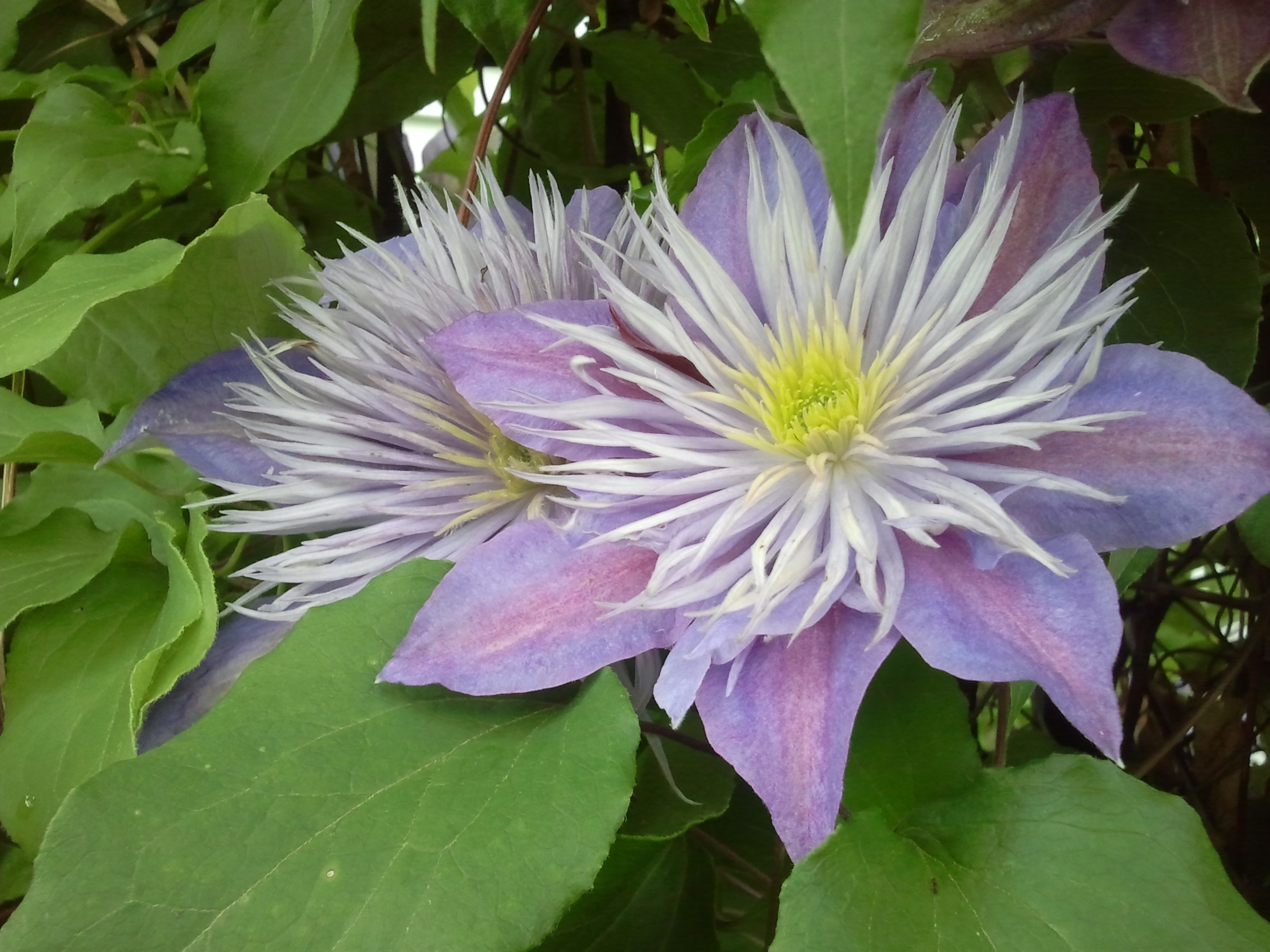
Two of the many beautiful and unusual clematis Dan offers include Clematis Crystal Fountain (also known as Clematis Fairy Blue’), which is a lovely double, and Clematis Rebecca, one of the most beautiful of red clematis.  Photos below.

Clematis Crystal Fountain (aka Fairy Blue)

Clematis Crystal Fountain (aka Fairy Blue)


Clematis Rebecca

Clematis Rebecca

Clematis Serious Black (aka Clematis recta Lime Close)

Clematis recta Serious Black

Clematis recta Serious Black

The recent March/April 2013 issue of Fine Gardening magazine has a small article on page 16 about Clematis Serious Black (also known as Clematis recta Lime Close), in which the Northwest Perennial Alliance (NPA) is erroneousely identified as a source. As NPA is getting requests for the clematis, they asked me if I knew of a source. Update: Turns out that NPA is in fact a source — for the SEED of Clematis Serious Black. Please see comment from Fine Garding below for details about how to obtain the seed. And remember, a seedling does not necessarily look like its parent.

This non-climbing clematis throws 4-6′ vines that either ramble through the garden or require support. Its beauty is in its very dark purple (nearly black) leaves that show off the small starry white summer flowers. After checking my own Clematis sources, I found that Clematis Serious Black does not seem to be readily available in the US.  According to Clematis on the Web (a wonderful site for information about thousands of clematis), “The stems and leaves are purple and fade only very slowly. The leaves are a darker colour than those of recta ‘Purpurea’. The original plant was acquired as recta ‘Purpurea’ and grown by Miss C Christie-Miller at ‘Lime Close’, her garden in Oxfordshire, UK.”

Clematis recta 'Purpurea' in Bloom

Clematis recta ‘Purpurea’ in Bloom

Apparently, Clematis Serious Black has not made it across the pond in enough numbers yet for selling. But Clematis recta ‘Purpurea” is available–-I have it myself and love it. While its leaves are not quite as dark as Serious Black, Purpurea has strikingly rich dark purple leaves in spring and early summer, then blooms with white starry fragrant flowers. It really is a lovely plant and might just tide us over until Serious Black makes the scene in this part of the world.

Clematis recta ‘Purpurea’ is currently available at Joy Creek Nursery in Oregon, where you can mail order it. It is also available at T&L Nursery, a wholesale nursery in Redmond, Washington.

Trust me — as soon as I can find one, Clematis Serious Black will grace my garden!

NEXT POST: Brushwood Nursery, the last but not least of my three favorite mail-order nurseries for clematis.

« Older entries Newer entries »